
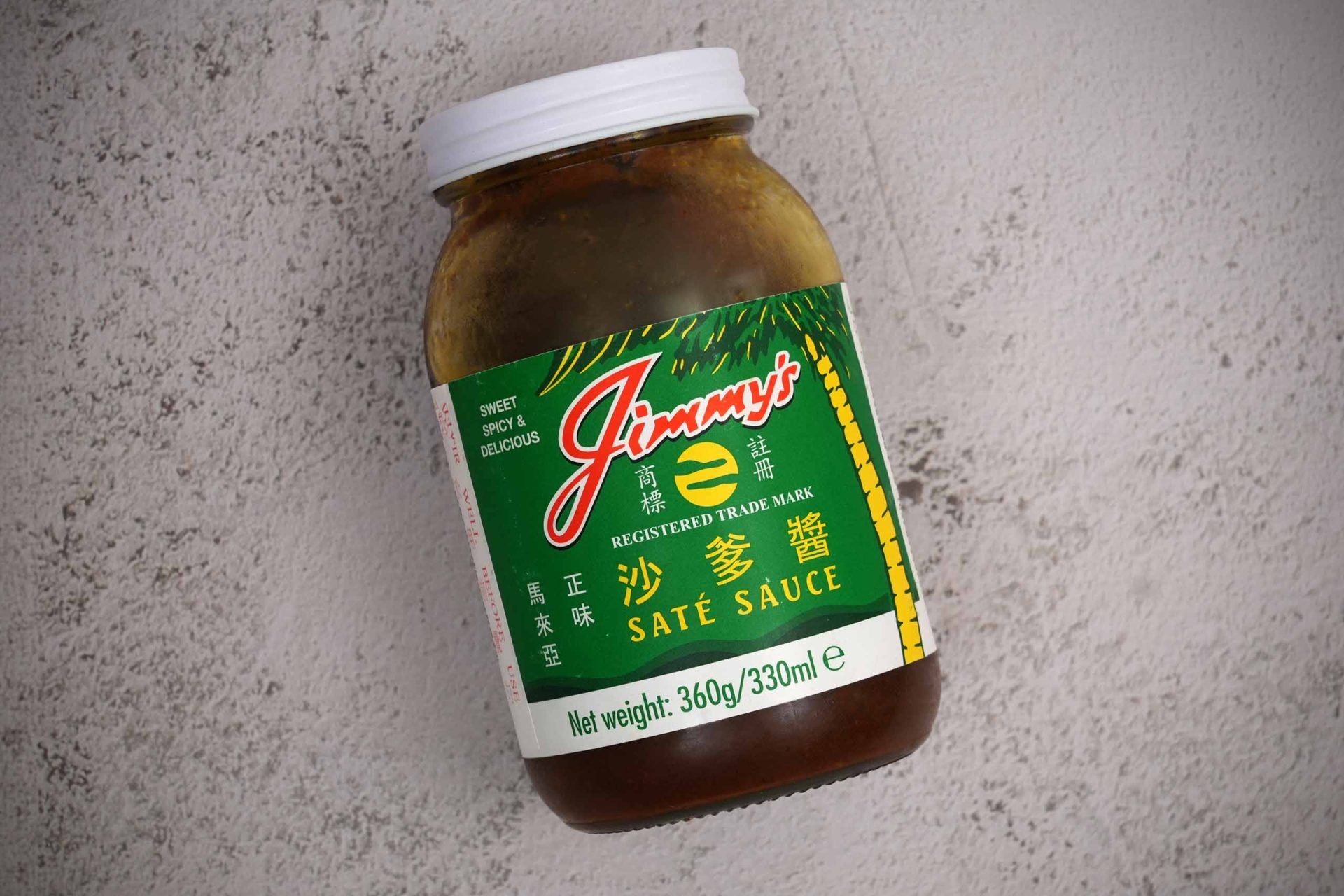
Jimmy’s Sate Sauce is the Secret Weapon of the Asian Pantry
There are sauces you buy for a particular recipe, use once or twice and then forget about. Then there are sauces that quietly become permanent residents of the refrigerator. Jimmy’s Sate Sauce belongs firmly in the second category.
For generations of cooks across Asia, Australia and beyond, Jimmy’s has been one of those pantry shortcuts that can turn an ordinary meal into something remarkably satisfying. It is rich, nutty, savoury, slightly sweet and gently spicy, with the unmistakable flavour of peanuts and Southeast Asian spices. And while it is sold as a sate, or satay, sauce, calling it simply a dipping sauce doesn’t really do it justice.
Jimmy’s Sate Sauce has been produced in Hong Kong for more than 60 years, and the manufacturer, Chun On Foods, describes it as an ingredient used by both chefs and home cooks for satay dishes, dips, marinades and hotpot bases.
The sauce is part of a much bigger culinary tradition. Satay and peanut sauces have deep roots in Southeast Asian cooking, particularly Indonesia, and variations can be found throughout Malaysia, Singapore and Thailand. Jimmy’s takes those familiar flavours and packages them into a ready-to-use sauce that has developed a following of its own.
What makes Jimmy’s sate different?
The first thing you notice when you open a jar is the aroma. It is unmistakably peanutty, but there is much more going on underneath. Garlic, spring onion, curry spices and chilli give the sauce its savoury, aromatic character, while soy sauce contributes saltiness and umami.
According to the manufacturer’s ingredient information, the sauce contains peanuts, soy sauce, sugar, spring onion, garlic, shrimp, curry powder and chilli, along with vegetable oil.
Peanuts make up a significant proportion of the sauce, giving it its characteristic richness and body. The shrimp is particularly interesting because it adds another layer of savouriness and helps distinguish Jimmy’s from a simple peanut-butter-based sauce. It has that slightly funky, briny quality that is common in many Southeast Asian sauces.
The result is not a delicate condiment. Jimmy’s has personality.
It is rich without being overwhelmingly heavy, sweet without becoming a dessert sauce, and spicy enough to give food some warmth without dominating everything else.
More than just satay
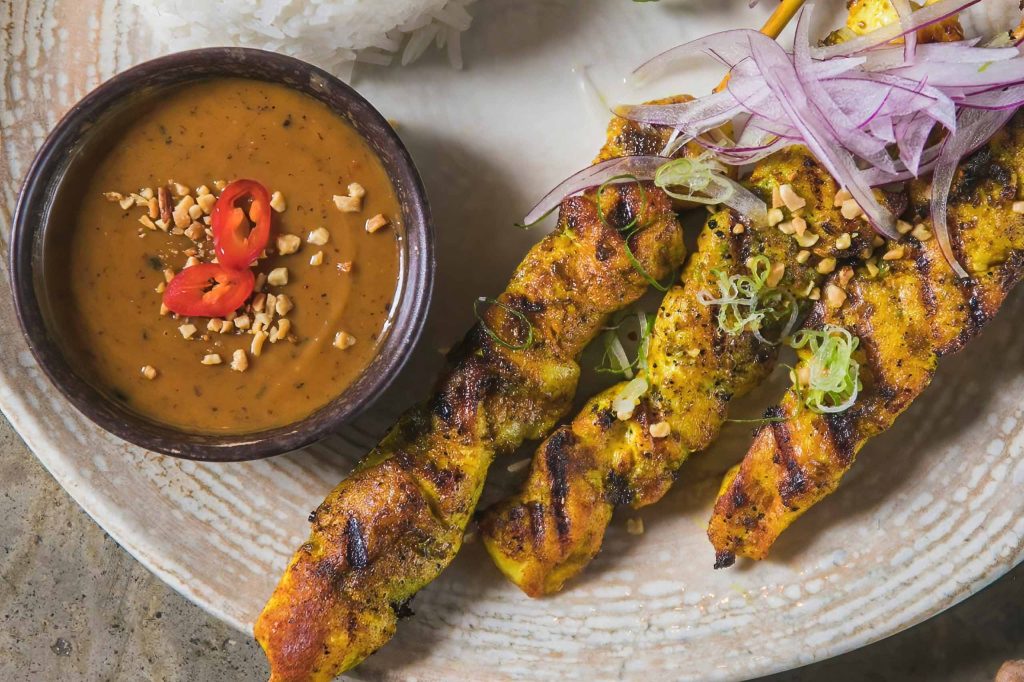
Of course, Jimmy’s is perfect for satay.
Grilled chicken skewers, brushed or served with a generous spoonful of warm Jimmy’s, are an obvious match. The smoky, charred meat works beautifully with the rich peanut sauce. But the real fun begins when you stop thinking of it as something reserved for skewers.
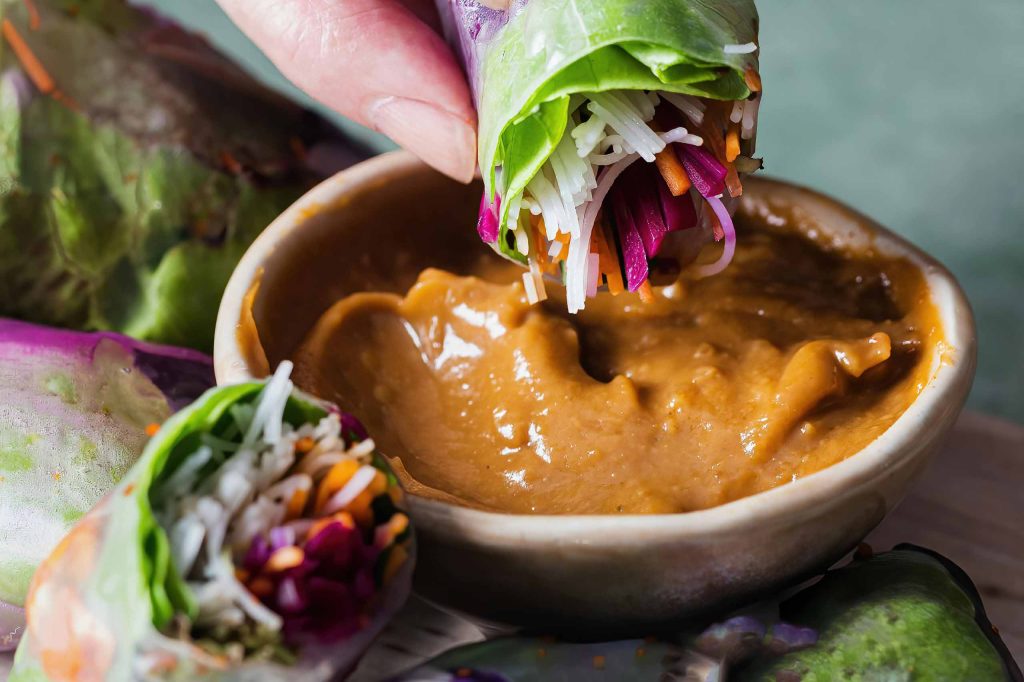
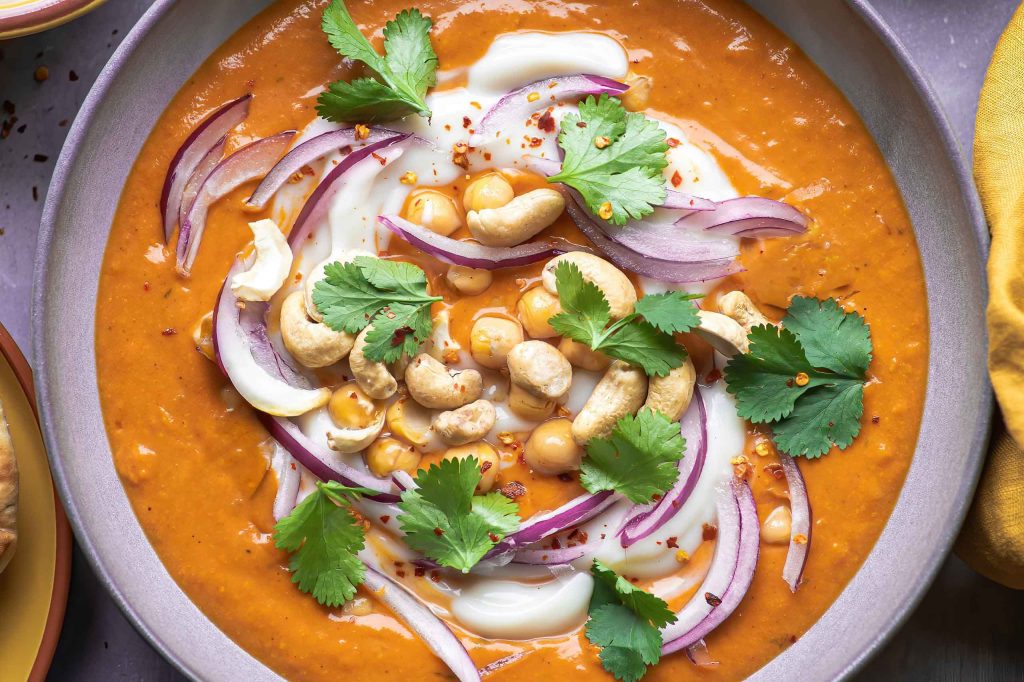
The sauce can be diluted slightly with water, coconut milk or stock to create a quick cooking sauce. Add it to chicken and vegetables for a fast stir-fry, toss it through noodles, or use it as the base for a quick Southeast Asian-inspired curry.
It also works brilliantly as a marinade. The combination of oil, peanuts, spices and soy sauce gives meat plenty of flavour before it even reaches the grill.
Jimmy’s own range of recipe ideas extends across meat, noodles, seafood, vegetables and snacks, reflecting just how versatile the sauce can be.
And then there are the less obvious uses.
Try a spoonful with fried eggs. Stir it through noodles after a long day at work. Spread a little into a sandwich. Mix it with mayonnaise. Drizzle it over roasted vegetables. Add it to a burger.
Once the jar is open, the possibilities start multiplying.
The Australian connection
Jimmy’s has developed a particularly strong following here in Australia, where it is available through Asian supermarkets and a growing number of mainstream food retailers. The sauce is also widely used by restaurants and takeaways.
That makes sense when you consider Australia’s long love affair with Asian food. Satay has been a familiar fixture on Australian Chinese restaurant menus for decades, and peanut sauces have become part of the country’s broader culinary landscape.
For many Australians, Jimmy’s isn’t necessarily something discovered while researching the history of Indonesian satay. It is something encountered in a restaurant, at an Asian grocery store or in the kitchen at home.
And that is part of its charm.
It sits somewhere between an authentic traditional ingredient and a modern convenience product. The flavours are rooted in Southeast Asian cooking, but the sauce is designed to make cooking those flavours incredibly easy.
A little jar with a lot of flavour
One of the reasons Jimmy’s has lasted so long is convenience.
Making a traditional peanut satay sauce from scratch can involve roasting or grinding peanuts, frying aromatics, balancing spices, adding liquid and adjusting the sweetness and saltiness. There is nothing wrong with doing that, and the results can be fantastic.
But sometimes you just want dinner.
Jimmy’s allows you to get surprisingly close to that familiar satay flavour with almost no preparation. Heat it gently, loosen it if necessary and you have a sauce ready for the table.
That convenience has helped it find a place not only in home kitchens but also in professional kitchens and restaurants. The sauce is marketed specifically as a base for satay, dips, marinades and hotpot dishes.
What does it taste like?
If you have never tried it, imagine a meeting between peanut butter, soy sauce, curry spices, garlic and chilli — but with considerably more savoury depth.
The peanuts arrive first, giving the sauce its creamy, roasted character. Then comes the saltiness and umami from the soy sauce, followed by garlic, onion and spices. There is sweetness in the background, while chilli provides a gentle warmth.
It is a medium-heat sauce, rather than an aggressively hot one.
That balance is important. The chilli is there to make you want another mouthful, not to overwhelm the peanuts.
And unlike a plain peanut sauce, Jimmy’s has a distinctly Southeast Asian savouriness. The shrimp and fermented soy elements give it a complexity that makes it particularly good with grilled meat.
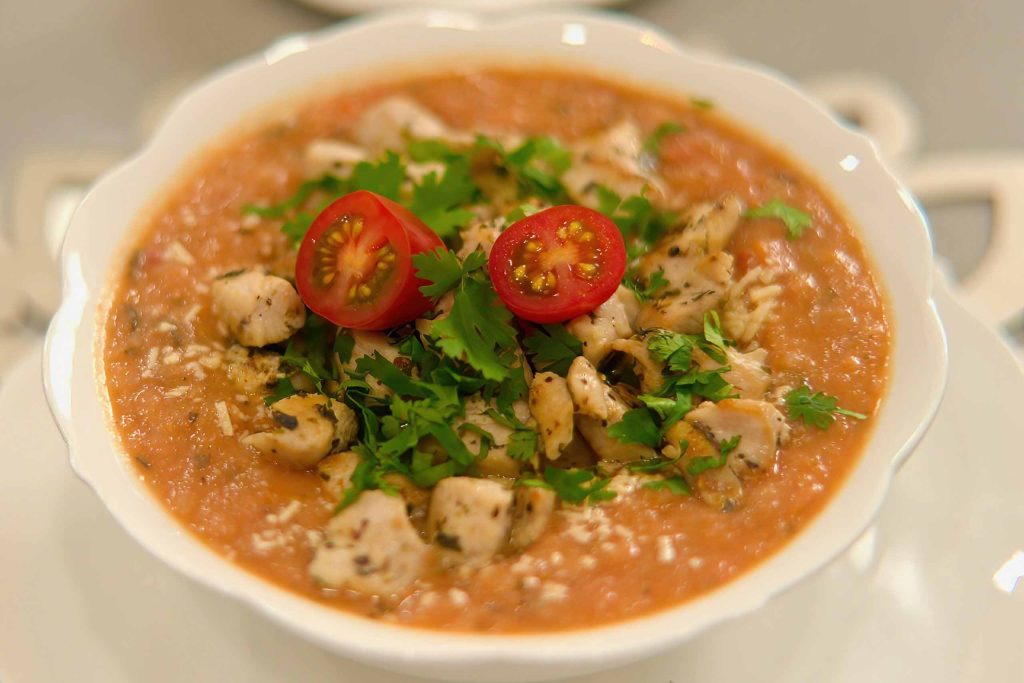
Jimmy’s Sate is the ultimate flavour shortcut
Perhaps the best way to think about Jimmy’s Sate Sauce is as a flavour shortcut.
You don’t need ten ingredients, a mortar and pestle and half an hour of preparation. A jar gives you a concentrated base of peanut, spice, garlic, chilli and umami that can be turned into dinner in minutes.
Chicken and vegetables? Jimmy’s.
Noodles? Jimmy’s.
Leftover roast meat? Jimmy’s.
Steamed vegetables that need rescuing? Definitely Jimmy’s.
A plate of grilled prawns? Try it.
Even a simple bowl of rice can be transformed with a spoonful.
There is something wonderfully democratic about a sauce like this. It doesn’t require you to be an expert cook. You simply need to know when to reach for the jar.
A taste of Southeast Asia
Jimmy’s Sate Sauce may be made in Hong Kong, but its flavour belongs to a much broader Southeast Asian culinary tradition. Satay sauces vary enormously from country to country and cook to cook, but the combination of peanuts, spices, sweetness, salt and chilli is instantly recognisable.
Jimmy’s has taken that flavour profile and turned it into a distinctive product with a history stretching back more than six decades.
That longevity tells you something.
Food trends come and go. Ingredients appear on supermarket shelves for a few years and disappear. Jimmy’s has survived because people actually use it. Chefs use it, home cooks use it, restaurants use it — and once people discover how versatile it is, they tend to keep a jar nearby.
So, whether you use it traditionally with chicken satay, stir it through noodles, turn it into a curry sauce or simply find yourself putting it on everything from eggs to vegetables, Jimmy’s Sate Sauce is much more than a jar of peanut sauce.
It is one of those great pantry ingredients that rewards experimentation.
And sometimes, the best test of a sauce is very simple: open the fridge, look at whatever needs cooking, and ask yourself, “Would Jimmy’s make this better?”
Quite often, the answer is yes.