
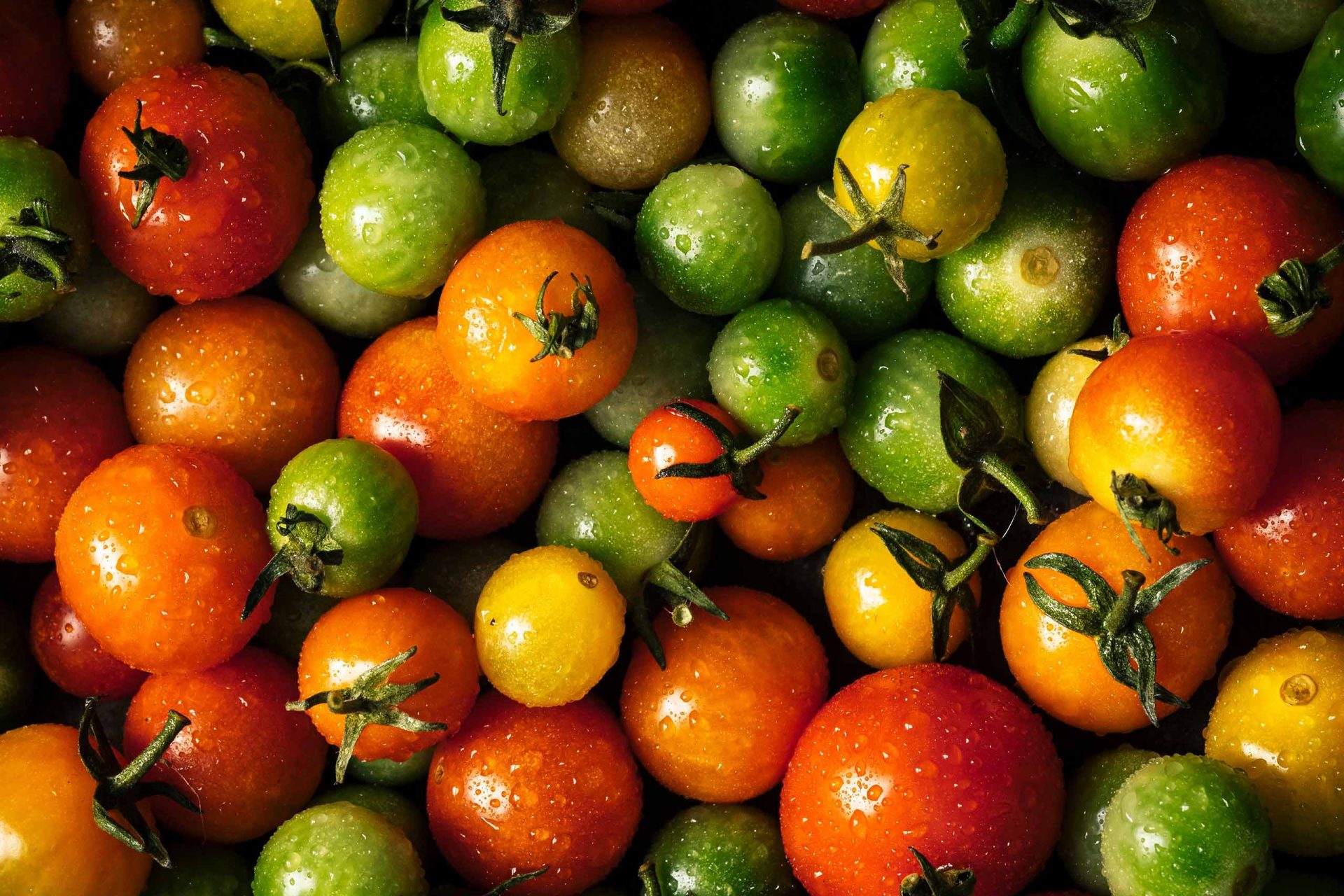
Tomatoes are the Fruit I Couldn’t Live Without
There are some ingredients I simply can’t imagine my kitchen without, and tomatoes are right near the top of that list.
I use them in salads, sauces, sandwiches, stews, curries, pasta, pizza and breakfast dishes. I eat them raw, roast them, fry them, slow-cook them, dry them and turn them into sauces. And when summer comes around and tomatoes are genuinely ripe, sweet and full of flavour, I can quite happily stand at the kitchen bench eating one with a little salt.
Technically, of course, a tomato is a fruit. But nobody seems particularly interested in calling it one. In the kitchen, it’s a vegetable, and I’ve never heard anyone order a “fruit salad” and expect tomatoes to turn up.
What I love most about tomatoes is their versatility. They’re sweet, acidic, juicy, savoury and incredibly adaptable. They can be the star of a dish or quietly sit in the background making everything else taste better.
And the funny thing is that tomatoes haven’t been part of European cooking for nearly as long as many of us imagine.
Their journey around the world is one of the great stories of food.
Where Did Tomatoes Come From?
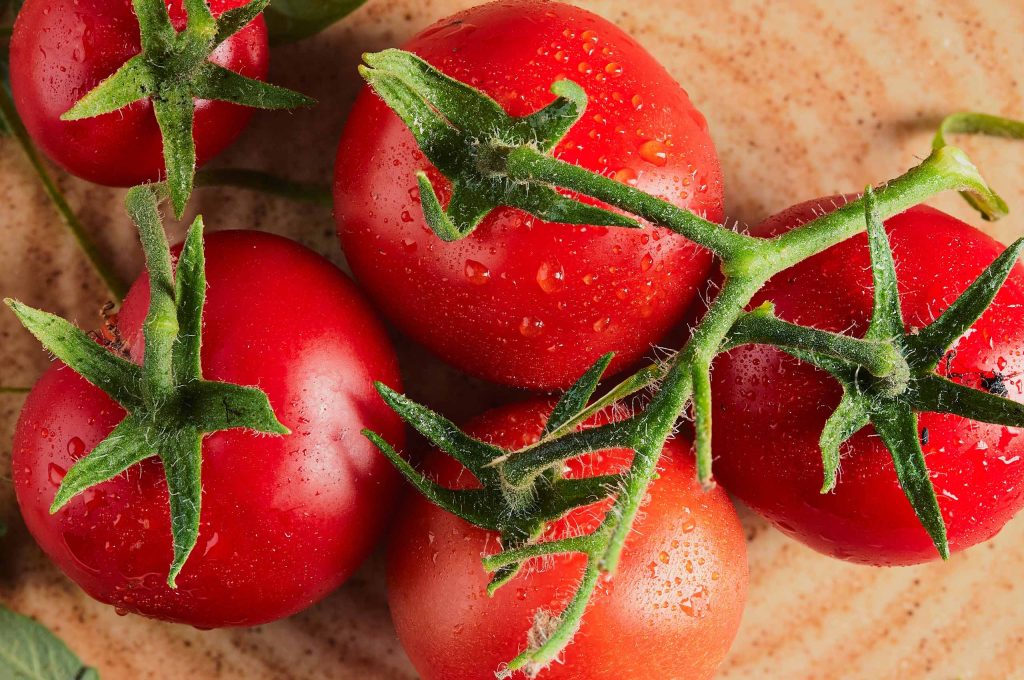
Whenever I think about tomatoes, I find it fascinating that this ingredient, which seems so completely at home in Mediterranean cooking, actually came from the Americas.
Tomatoes originated in South America, with their early history linked to the Andes. They were eventually cultivated and developed further in Mesoamerica, where Indigenous peoples were growing and eating them long before Europeans arrived.
The Aztecs and other Indigenous peoples of Mesoamerica used tomatoes in sauces and other dishes, often combining them with chillies and other ingredients.
In fact, the English word “tomato” comes from the Nahuatl word tomatl.
Then the Europeans arrived in the Americas, and suddenly the tomato began a journey that would eventually change kitchens around the world.
Spanish explorers and traders carried tomato plants back across the Atlantic during the sixteenth century.
And this is where the story gets interesting.
You might assume that Europeans immediately saw a tomato and thought, “Fantastic. Let’s make pasta sauce.”
They didn’t.
Europe Wasn’t Immediately Convinced
The tomato belongs to the nightshade family, which includes potatoes, eggplants and some seriously poisonous plants.
Understandably, Europeans weren’t immediately convinced that this strange red fruit was something they should be eating.
For quite a while, tomatoes were grown more as ornamental plants than as food.
I find that hard to imagine today. If someone gave me a garden full of beautiful, ripe tomatoes and told me I wasn’t supposed to eat them, I’d probably ignore them.
Eventually, though, people started experimenting.
Spain and Italy were among the European countries where tomatoes began to gain a foothold, helped enormously by the warm Mediterranean climate.
And once cooks discovered what tomatoes could do, there was really no stopping them.
Tomatoes added colour, sweetness and acidity to food. They worked beautifully with olive oil, garlic, onions, herbs, cheese and meat. Cook them slowly and they became rich and intensely savoury.
Italy, in particular, fell in love with them.
How Italy Fell in Love with the Tomato
When I think of tomatoes and Italy, I immediately think of pasta and pizza.
It’s almost impossible to imagine modern Italian food without tomato sauce. Yet tomatoes weren’t part of ancient Roman cooking. They arrived centuries after the Roman Empire had disappeared.
Over time, though, they became completely integrated into Italian cooking.
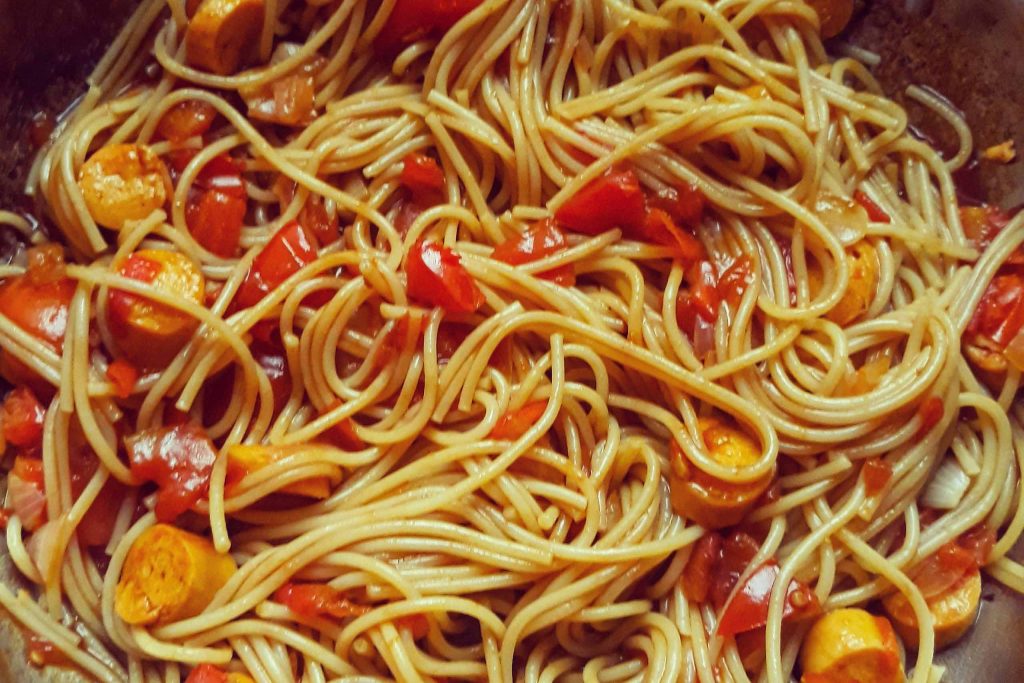
Take spaghetti al pomodoro.
On paper, it’s almost ridiculously simple: pasta, tomatoes, olive oil, perhaps garlic or onion, basil and seasoning.
But that’s exactly why I love it.
There’s nowhere for poor ingredients to hide.
If the tomatoes are ripe and full of flavour, the dish can be extraordinary. If the tomatoes are bland and watery, no amount of fancy cooking is going to completely rescue them.
Then there’s pizza.
A classic Neapolitan pizza can be incredibly simple. Tomato, mozzarella, basil, olive oil and dough.
That’s it.
And yet when it’s made properly, it’s one of those dishes where every ingredient seems to have a job. The tomato brings acidity and sweetness, the mozzarella brings creaminess, the basil gives freshness and the olive oil ties everything together.
Sicily has its own tomato classics too. Pasta alla Norma combines tomato sauce with eggplant, salted ricotta and basil. Again, the tomato provides the bright, acidic backbone that keeps the richer ingredients from becoming too heavy.
Mexico is Another Great Tomato Kitchen
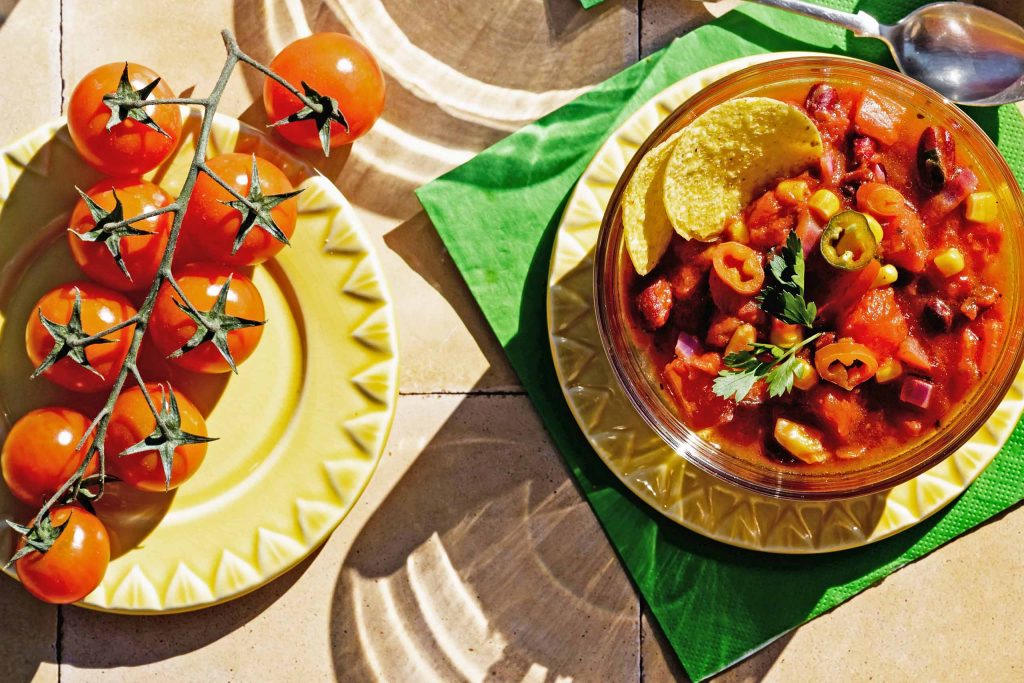
If Italy has made tomatoes famous around the world, Mexico deserves enormous credit for showing just how naturally tomatoes belong with chillies.
This is one of the things I love about travelling through different food cultures. You can take the same ingredient and suddenly discover that another country has been doing something completely different with it.
Mexican cooking uses tomatoes everywhere.
Fresh tomatoes go into salsas with onion, coriander, chilli and lime. Tomatoes can be roasted until they become smoky and sweet, then blended into sauces.
One of my favourite examples is salsa roja.
There are countless versions, and that’s part of the fun. Tomatoes can be roasted or boiled, then combined with chillies, onion, garlic and herbs.
The result can be fresh and bright or smoky and fiery.
Then there’s huevos rancheros.
Fried eggs, tortillas and a tomato-and-chilli sauce might sound simple, but it’s a brilliant combination. The richness of the eggs needs the acidity of the tomato, while the chilli brings everything to life.
This is one of the things tomatoes do better than almost any other ingredient: they balance rich food.
Tomatoes Around the World
Once tomatoes escaped the Americas and Europe, they didn’t stop travelling.
They made their way into kitchens across Africa, the Middle East and Asia, and each culture found its own way of using them.
Take shakshuka.
I love this dish because it shows how tomatoes can become much more than a sauce. They’re cooked with peppers, onion, garlic and spices, and then eggs are poached directly in the mixture.
You end up with something that’s somewhere between a stew, a sauce and breakfast.
And then there’s Turkish menemen.
Tomatoes and green peppers are cooked down before eggs are added. I particularly like the idea of eating it with plenty of good bread because you get to scoop up all those soft eggs and tomato juices.
Tomatoes and India
It’s easy to think of tomatoes as ancient ingredients in Indian cooking, but they arrived in India from the Americas after European contact.
They didn’t take long to become incredibly important.
Today, I can’t imagine many Indian kitchens without them.
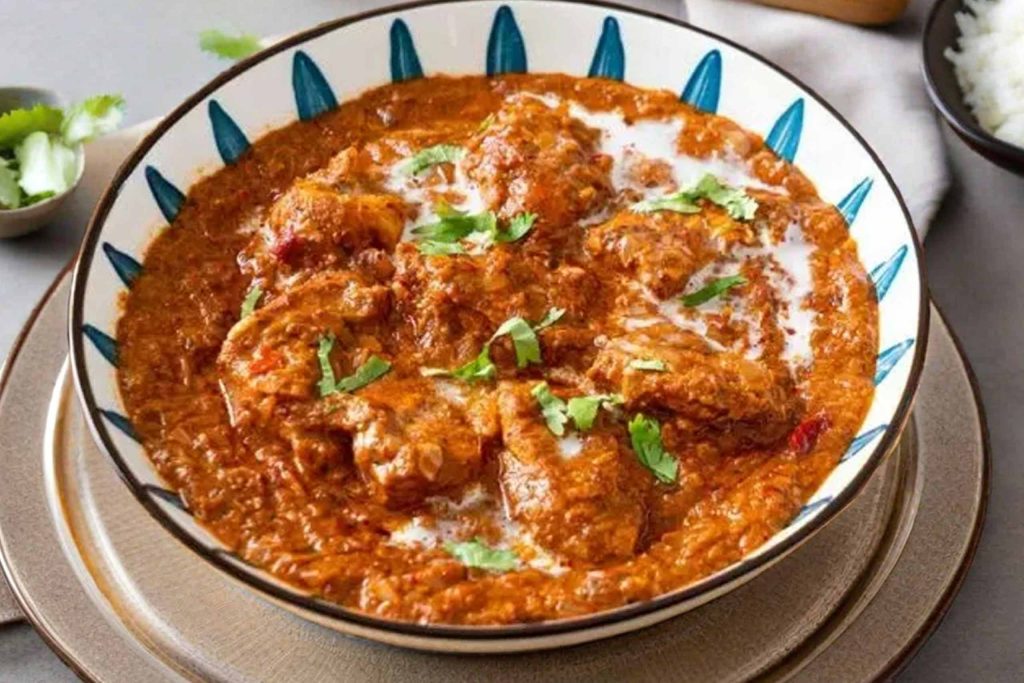
Tomatoes are used in curries, sauces, chutneys and soups. They bring acidity to dishes that might otherwise be dominated by spices, fat or dairy.
One of my favourite examples is rasam from southern India.
It’s thinner than a typical curry and can be wonderfully spicy, sour and aromatic. Tomatoes can play an important role in that combination.
Again, it’s the acidity that really matters.
Tomatoes don’t simply add tomato flavour. They change the balance of a dish.
China Has Its Own Tomato Classics
One of the simplest tomato dishes I’ve come across is Chinese tomato and egg stir-fry.
It doesn’t look particularly complicated, and that’s precisely the point.
Soft scrambled eggs are combined with juicy tomatoes, creating a dish that’s sweet, savoury and slightly sour.
It’s the sort of food that reminds me that great cooking doesn’t always require dozens of ingredients.
Sometimes you just need two or three things that work beautifully together.
Tomatoes have also found their way into Chinese soups, noodle dishes and regional cooking.
It’s another reminder of just how adaptable they are.
Greece and the Joy of a Raw Tomato
Sometimes I think we overcomplicate tomatoes.
Give me a perfectly ripe tomato, good olive oil, a little salt and some crusty bread and I’m happy.
Greek food understands this perfectly.
A traditional Greek salad combines tomatoes with cucumber, onion, olives, feta and olive oil.
There’s no need to cook anything.
The tomato is simply allowed to be itself.
And that’s often when I think tomatoes are at their best.
A supermarket tomato picked before it’s properly ripe can be disappointing. A tomato picked at the right moment, when it’s warm from the sun and full of juice, is an entirely different thing.
France and Ratatouille
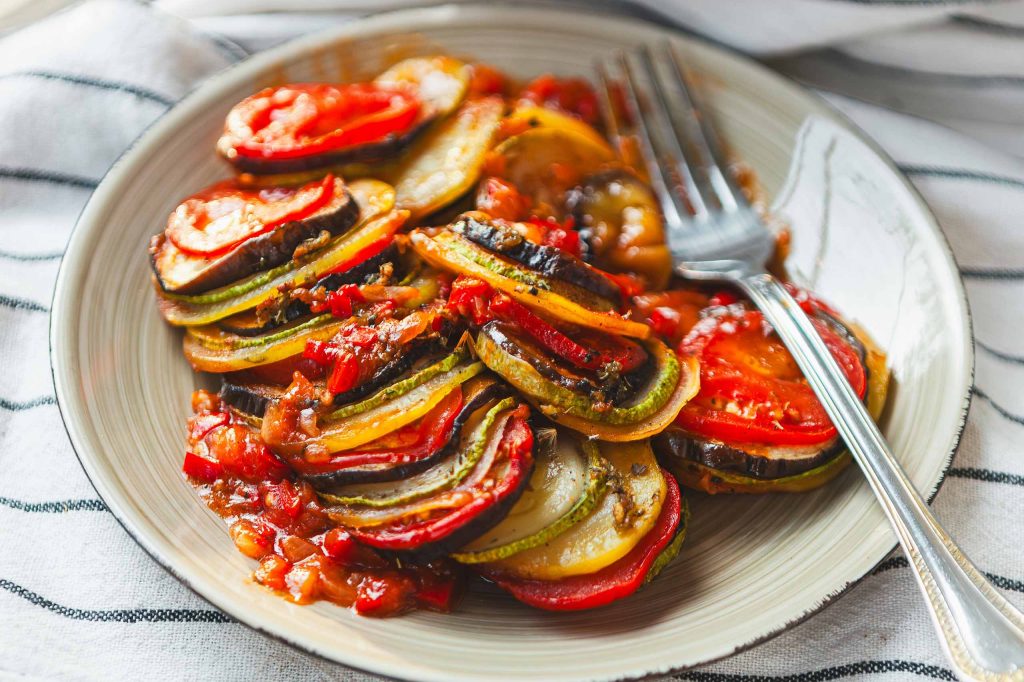
Tomatoes also play a major role in one of France’s great vegetable dishes: ratatouille.
Eggplant, zucchini, capsicum, onion, garlic, herbs and tomatoes are cooked together to create a deeply satisfying vegetable stew.
There are plenty of arguments about exactly how ratatouille should be cooked, but I don’t think the tomato’s role is controversial.
It provides moisture, acidity and richness while helping bring all those vegetables together.
It’s another example of tomatoes acting almost like culinary glue.
Spain’s Perfect Summer Soup
When the weather is hot, few things appeal to me more than gazpacho.
This Spanish cold soup is particularly associated with Andalusia and is made from tomatoes, cucumber, capsicum, garlic, olive oil, vinegar and often bread.
It’s incredibly refreshing.
The combination of cold, juicy tomatoes and sharp vinegar makes perfect sense on a hot day.
And it’s another dish that demonstrates how little you need to do to a good tomato.
You don’t need to cook it for hours.
You don’t need an elaborate sauce.
Sometimes you just blend it with a few other ingredients and let it do the work.
The Tomato Sandwich
I also think tomatoes deserve more respect in the sandwich department.
Take the American BLT: bacon, lettuce and tomato.
The bacon provides salt and fat. The lettuce brings crunch. The mayonnaise adds richness.
But the tomato is what stops the whole thing becoming heavy.
Without that juicy, acidic tomato, you’d basically have a pile of fat and crunch between two pieces of bread.
The tomato makes it work.
I find this is true with so many foods. Put tomato alongside something rich and suddenly the whole dish feels lighter.

Tomatoes in Australia
Growing up with Australian food culture, tomato sauce is almost impossible to escape.
We squeeze it onto sausages, meat pies, chips, eggs and countless other things.
Australian tomato sauce is generally sweet, thick and tangy, and it’s become one of those everyday condiments that barely gets a second thought.
But I think that’s part of the tomato’s appeal.
It can be an exotic ingredient in a Mexican salsa, a treasured heirloom tomato on a plate of burrata, or something you grab from the fridge to put on a sausage.
Few ingredients have that range.
Great tomato dishes from around the world
| Dish | Country of Origin | What it is |
|---|---|---|
| Pizza Margherita | Italy | Neapolitan pizza topped with tomato, mozzarella and basil |
| Spaghetti al Pomodoro | Italy | Pasta served with a simple tomato, olive oil and herb sauce |
| Pasta alla Norma | Italy | Sicilian pasta with tomato, eggplant, basil and salted ricotta |
| Gazpacho | Spain | Cold soup made primarily from tomatoes, cucumber, capsicum, garlic and olive oil |
| Ratatouille | France | Provençal vegetable stew featuring tomatoes, eggplant, zucchini and capsicum |
| Shakshuka | Tunisia | Eggs poached in a spiced tomato and pepper sauce |
| Menemen | Türkiye | Scrambled eggs cooked with tomatoes and green peppers |
| Huevos Rancheros | Mexico | Fried eggs served with tortillas and a tomato-chilli sauce |
| Salsa Roja | Mexico | Tomato-based salsa made with chillies and other fresh ingredients |
| Chilaquiles | Mexico | Tortilla chips simmered or topped with tomato-based salsa, often with eggs and cheese |
| Tomato and Egg Stir-Fry | China | Soft scrambled eggs cooked with juicy tomatoes |
| Rasam | India | Spicy, sour South Indian soup often made with tomato, tamarind and spices |
| Butter Chicken | India | Chicken cooked in a rich, spiced tomato and butter-based sauce |
| Jollof Rice | Nigeria / West Africa | Rice cooked in a richly seasoned tomato and pepper base |
| Greek Salad (Horiatiki) | Greece | Tomatoes, cucumber, olives, onion and feta dressed with olive oil |
| Portuguese Tomato Rice | Portugal | Rice cooked in a rich tomato-based broth, often served with fish or meat |
| Pisto | Spain | Spanish vegetable dish similar to ratatouille, with tomato, peppers, zucchini and onion |
| Lecsó | Hungary | Hungarian stew of tomatoes, peppers and onions, sometimes with sausage or eggs |
| Tom Yum | Thailand | Hot and sour Thai soup that can include tomatoes alongside herbs, chilli and seafood |
| Aussie Sausage with Tomato Sauce | Australia | Grilled sausage commonly served with sweet Australian-style tomato sauce |
Why Tomatoes Taste So Good
There’s a scientific reason tomatoes are so addictive.
They’re a mixture of sugars, acids, aromatic compounds and natural glutamates.
That gives them a combination of sweetness, sourness and umami.
And that balance changes when you cook them.
A raw tomato is bright, juicy and fresh.
Cook it slowly and the water evaporates, the sugars concentrate and the flavour becomes deeper.
Roast it and you can get caramelised edges and an almost meaty intensity.
Dry it and the flavour becomes even more concentrated.
That’s why I can eat a fresh tomato in a salad one day and then use a completely different form of tomato paste in a slow-cooked stew the next.
They’re technically the same ingredient, but they behave like completely different foods.
Fresh, Canned, Dried or Concentrated?
I’m a big believer in using the right tomato for the job rather than automatically assuming fresh is best.
For a salad, I want fresh tomatoes.
For a pasta sauce in winter, I’ll happily reach for canned tomatoes.
For a slow-cooked stew, tomato paste can provide an incredible depth of flavour.
And sun-dried tomatoes are fantastic when I want something intensely savoury and sweet.
There is also something wonderful about preserving tomatoes.
A glut of summer tomatoes doesn’t have to go to waste. They can be bottled, canned, dried or turned into sauces.
That means the flavour of summer can stay in the kitchen long after the season has disappeared.
The Wonderful World of Tomato Varieties
One of the things I love about tomatoes is just how many different varieties exist.
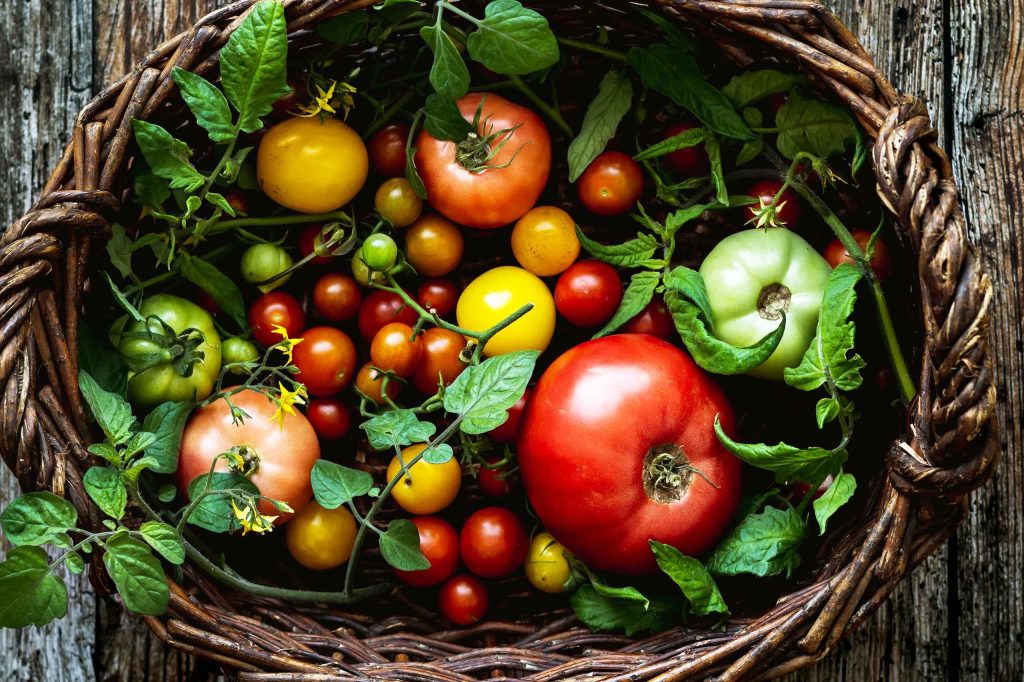
There are tiny cherry tomatoes, huge beefsteak tomatoes, long Roma tomatoes and all sorts of heirloom varieties.
They come in red, yellow, orange, green, purple and combinations of all of these.
Some are sweet. Some are acidic. Some are almost fruity. Others have a deep savoury flavour.
Roma tomatoes are particularly useful for sauces because they’re relatively meaty.
Cherry tomatoes are fantastic roasted because their sweetness intensifies.
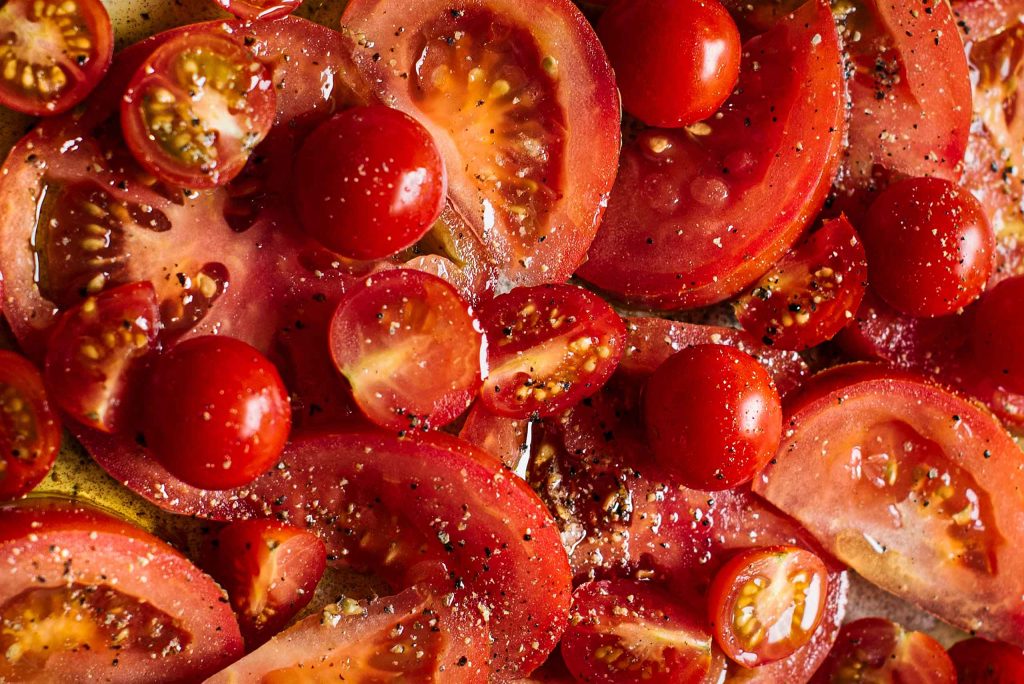
Large heirloom tomatoes are something I prefer to eat fairly simply. Slice one up, add salt, pepper and olive oil, and let it speak for itself.
And then there are green tomatoes.
They can be pickled, turned into chutney or fried.
Fried green tomatoes became particularly famous in the American South, where firm green tomato slices are coated and fried until crisp.
It’s another example of a cook looking at an ingredient that isn’t quite ripe and thinking, “I can still do something brilliant with this.”
The Tomato Changed the Way We Eat
The more I think about tomatoes, the more remarkable their story becomes.
This wasn’t an ingredient that naturally belonged to Italian, Indian, Chinese, Spanish or Middle Eastern cooking.
It travelled.
People carried it across oceans, farmers cultivated it, cooks experimented with it and entire cuisines eventually adopted it.
Today, I can eat a tomato-based pasta in Italy, salsa in Mexico, shakshuka in the Middle East, curry in India, tomato and egg in China, gazpacho in Spain and tomato sauce on a sausage in Australia.
They’re all using the same basic ingredient.
But they aren’t eating the same thing.
That’s what makes food so interesting to me.
An ingredient travels from one part of the world to another, and people don’t simply copy the original recipe. They adapt it. They add their own spices, techniques and traditions.
Eventually, the ingredient becomes part of the local cuisine.
A Fruit That Belongs Everywhere
So yes, technically, the tomato is a fruit.
But when I think about it, I don’t really care what we call it.
To me, it’s one of the great kitchen ingredients.
It’s one of the first things I reach for when I want acidity. It’s one of the easiest ways to add colour and freshness to a dish. It’s equally happy being the star of a salad or disappearing into a sauce.
And I love the fact that something as ordinary as a tomato has such an extraordinary history.
From Indigenous American agriculture, it travelled across oceans and eventually found a home in almost every major food culture on Earth.
That’s quite a journey for something sitting in the fruit and vegetable section of my local supermarket.
The next time I cut open a really good tomato, I think I’ll appreciate it a little more.
Because behind that simple red fruit is centuries of travel, experimentation and cooking.
And, thankfully, an awful lot of very good food.